
Scholarships | Student Projects (PhD; Honours) | Employment | Propose Your Own Project | Before You Apply
—
Scholarships
Australian citizens interested in pursuing a PhD with the Global Ecology Lab have several scholarship opportunities, including Flinders University Research Scholarships, College of Science and Engineering Research Awards, AJ & IM Naylon PhD Scholarships, Joyner Scholarships in Arts, Law, Medicine and Science, and Professor Lowitja O’Donoghue Indigenous Student Postgraduate Research Scholarships (for Indigenous students only).
There are also several options for international students (search here for available scholarships). After negotiating with us regarding supervision, prospective international PhD candidates will have to contact the International Office at Flinders.
Some potential projects for PhD candidates are listed below, as well as several possible Honours projects — these are not comprehensive, so we invite prospective students to discuss potential project ideas with us. We generally do not have a MSc programme at Flinders University.
Student Projects
PhD Projects

1. We have several PhD scholarships available within the context of the Australian Research Council Centre of Excellence for Indigenous and Environmental Histories and Futures (CIEHF), particularly in partnership with the Ngarrindjeri Aboriginal Corporation for projects taking place on Ngarrindjeri Ruwe (Country). We are currently co-developing projects with representatives of Ngarrindjeri Nation and invite interested candidates to enquire directly with the Director of the Global Ecology Laboratory for opportunities. We will give preference to Indigenous candidates, but the scholarships are open to anyone.
—

2. Paucity of predators: does Australia have fewer predators than it should?: Australia would appear to have few large (native) mammalian predators relative to other continents. Whether this is a result of insularism since Australia first separated from Gondwana around 100 million years ago, a product of differential extinction rates during the megafauna extinction event of the Late Pleistocene, or a combination of both is still unknown. Additionally, we are uncertain whether the paucity of predators applies to other taxonomic groups (birds, reptiles, amphibians), and if Australia differs markedly from other continental masses.
—

3. Network models to predict ecological change: Species assemblages are being rapidly rearranged due to human endeavour. Such changes can cause species extinctions and trophic cascades, and can also compromise ecosystem functions. However, some changes are not necessarily always negative from an ecosystem perspective —damaged assemblages can often ‘absorb’ changes and continue to function relatively well compared to more intact systems. With mounting ecological damage to the biosphere, we are obligated to improve our ability to predict the long-term consequences of these changes. But to do this, we first need to quantify the interactions between species — how species directly and indirectly affect each other.
Unfortunately for most species, we know little or next to nothing about how they interact with other species. Furthermore, changes to assemblages often involve the arrival of new species that have never before been sympatric with local species; we are even less likely to have information on how historically allopatric species interact. How can we infer the type and intensity of interactions between species for which we have no empirical interaction data? A generalised method to predict how species will interact — who will eat whom, who will compete with whom, etc. — is therefore required.
Body-size matching between predators and prey has been applied successfully before to infer trophic interactions in some taxonomic groups: fish, aquatic invertebrates, and some large mammals. In this project, you will investigate if/how trait-matching relationships vary among taxa. For example, does the predator-prey body size relationship differ between birds, reptiles, amphibians, mammals, and fish? Does the relationship differ between carnivorous versusomnivorous species? Tackling these questions will allow the construction of food webs for which empirical data are currently lacking (almost all food webs), including food webs for modified/future assemblages as well as for palaeo assemblages to investigate ancient extinction events. Food webs will be interrogated through network modelling, to investigate how the arrival or removal of a species, and other environmental changes, can have consequences that reverberate throughout the rest of the network.
—

4. Modelling the effects of environmental change and human population growth on the health of future children: We are on the threshold of a catastrophic environmental decline that will affect the future health and welfare of children. Despite clear evidence this will occur globally and in Australia, little research has focused on predicting, quantifying, and determining the time scale of these effects on child health. We have assembled a dedicated, collaborative team of experienced researchers with the expertise, modelling ability, leadership and track records to construct the most relevant predictors of future child health (main collaborators: Professor Peter Le Souëf, Dr Melinda Judge, Dr Syeda Hira Fatima; Future Child Health). We aim to model these data to promote the most efficient and effective preventive strategies.
Main aim: To make robust predictions of the future health and welfare of children in Australia and globally using the latest information on environmental changes and population demographics and dynamics.
Main hypothesis: Environmental changes and population increases over the next 10 to 50 years will result in declining health and well-being of young children; the magnitude and rate of this decline can be predicted by coupling modelling with current data, improving our ability to target medical and policy improvements aimed at protecting child health.
Specific aims:
- Model the most up-to-date data sources to quantify and predict the time scale of the effects of environmental changes and population increases on child health by country and region, with particular emphasis on Australia.
- Establish a new series of human population projections based on potential changes in global, regional and national Australian fertility rates.
- To use the predictions to assist in guiding regional and broader government planning to produce the best possible health outcomes for children in Australia and globally.

Honours Projects (also see here)
 1. Islands as conservation lifeboats: Islands are often used as ‘lifeboats’ for conserving biodiversity (e.g., northern quolls in the Northern Territory and Western Australia, devils in Tasmania, tuatara, and many other species in New Zealand), but islands are unusual in terms of the species they naturally support. The project will determine how and why Australian islands differ (in terms of species assemblages, trait space, trophic network, etc.) from adjacent mainland areas, and the implications for using islands as conservation lifeboats.
—
 2. Native invasives: determining which native animals translocated within Australia are most likely to expand their invasive ranges: This project will test whether species that have been translocated within Australia occupy different niche spaces to that experienced in their native range (i.e., are they able to expand their niche in invaded areas?). The project might also include a component looking at which Australian species have become invasive overseas, and test whether there are particular traits that make certain Australian species more likely to establish outside Australia.
—
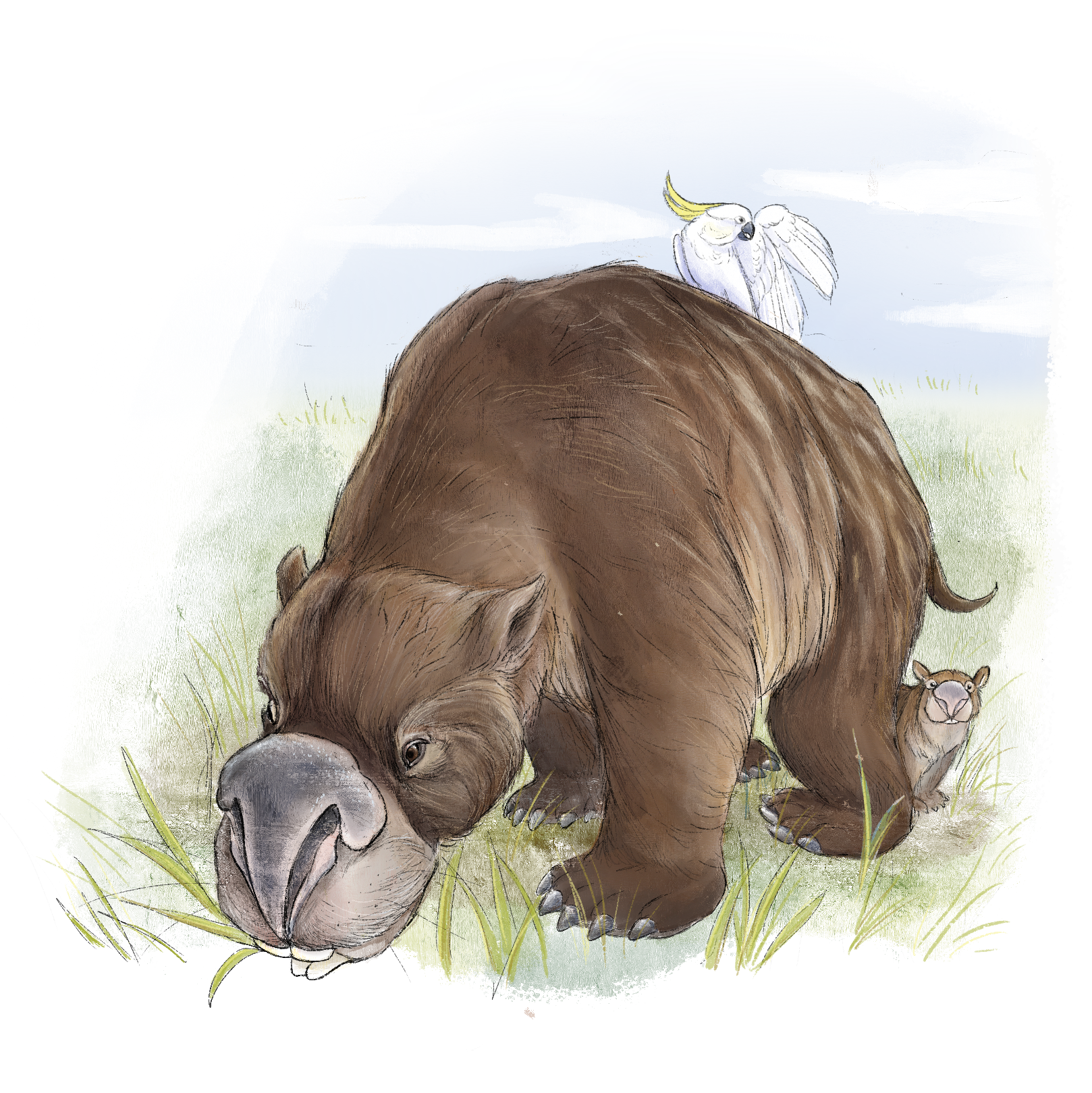 3. No-analogue climate and megafauna extinction: Climate change is one of the main drivers suggested to explain the demise of Late Pleistocene megafauna in Australia. Climate proxies used to test the effect of the palaeoclimate on megafauna extinctions suffer from a lack of representativeness (local-scale, remoteness, etc.). Promising new approaches based on global circulation models (GCM) can overcome these issues and can be used to build climate-change metrics. Climate-change metrics synthesise the complex effects of climate change and can potentially map where species were more likely to (i) adapt in situ to new climatic conditions, (ii) disperse and establish in areas with newly suitable climates, or (iii) decline to extirpation (i.e., become extinct from a particular region, but not vanish entirely). These metrics, including measures of novel and disappearing terrestrial climates, are used extensively to forecast future biological responses to climate change. This project aims to investigate the effects of climate change on megafauna extinction at a continental scale in Australia over the last 130,000 years by applying these metrics to GCM outputs and seek correlations between the proportion of novel and/or disappearing terrestrial climates and the number of extinct species.
——
Employment
- 3-year (with extension possibility) position just announced for a postdoctoral fellow in modelling palaeo-proxies in conjunction with the ARC Centre of Excellence for Indigenous and Environmental Histories and Futures (applications closed)
—
Propose Your Own Project
We are often approached by researchers who would like to develop their own proposals to join our lab. Salaries for researchers can often be funded via mechanisms like the Australian Research Council Discovery Early-Career Research Awards (DECRA), the Commonwealth of Australia’s Endeavour fellowships, or even overseas sources.
If you are interested in joining our lab and would like to investigate possible funding routes in this manner, please contact us.
Before You Apply …
Please read this post before you send an enquiry.
—


 Global Ecology @ Flinders